
Understanding Staining on Tritan™ Copolyester Tableware
Harfield testing, findings and practical guidance for commercial catering
Tritan™ copolyester is increasingly used for reusable tableware in education, healthcare and other demanding catering environments. It provides a durable, BPA-free alternative to traditional polycarbonate tableware and is designed to withstand repeated use and commercial dishwashing.
As with most reusable plastic tableware, however, strongly coloured foods can occasionally cause visible staining.
Harfield has carried out practical in-house testing to better understand when staining is most likely to occur and, importantly, how catering teams can reduce the risk.
Why can some foods stain reusable tableware?
Certain foods contain particularly strong natural or added colourants.
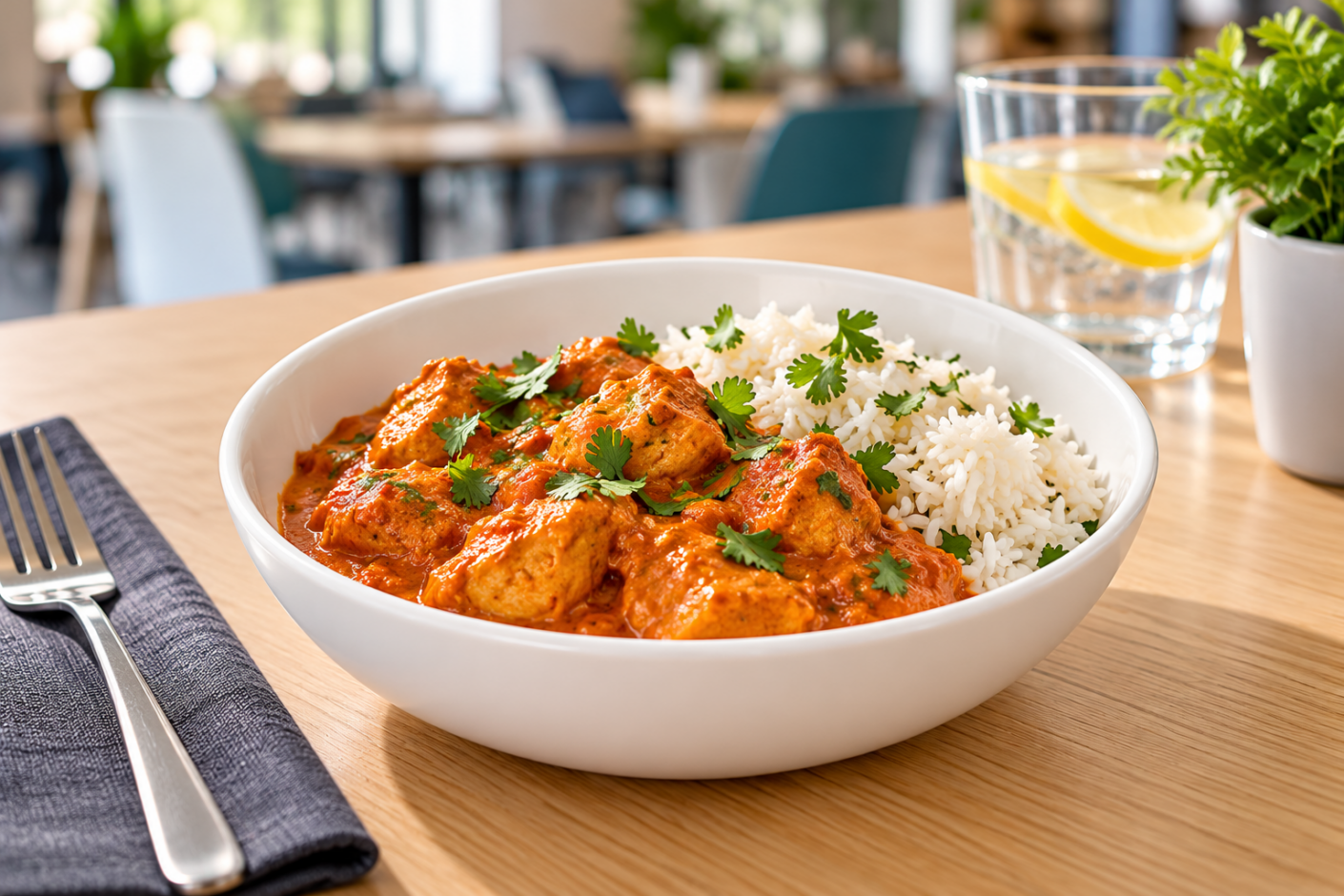
Curry is one of the most challenging examples because many recipes contain turmeric, which has an intense yellow pigment. Tomato-based sauces can also be strongly coloured.
The likelihood of staining is not determined by colour alone. Temperature, fat content, heating method, length of contact and the temperature of the tableware itself can all influence how readily colour is transferred to the surface.
This is why staining may occasionally occur in one catering environment but not another using apparently similar food.
What did Harfield test?
Harfield carried out a series of practical catering-style trials using white Tritan™ copolyester tableware and foods known to present a higher staining risk.
The trials included strongly coloured foods such as curry and tomato-based dishes under different temperature and heating conditions.
The purpose of the testing was not to establish a laboratory stain-resistance specification. It was designed to reproduce realistic catering conditions and identify practical steps that can help customers maintain the appearance of their tableware.
What did we find?
Normal hot-food service performed well
In repeated trials, hot food served onto Tritan tableware at normal plate temperature did not produce significant staining.
Food temperatures were progressively increased during the testing, including trials at approximately 95°C, without visible staining under the test conditions.
This is an important finding because it suggests that serving hot food itself is not necessarily the cause of staining.
Microwave reheating significantly increased the risk
The clearest staining during our testing occurred when curry was heated directly on the Tritan plate in a microwave.
Microwave heating can create very high localised temperatures within the food, particularly where oils and fats are present.
For this reason, where maintaining the appearance of the tableware is important, Harfield does not recommend microwave reheating of strongly coloured foods such as curry or tomato-based sauces on Tritan tableware.
Preheating the tableware also increased the risk
A further trial produced an important additional finding.
A Tritan plate was preheated to approximately 75°C before hot curry was added.
Under these conditions, visible staining occurred.
This contrasted with trials where similarly hot food was placed onto a plate that had not been preheated.
The test therefore suggests that heating the tableware itself before service can increase the likelihood of staining when it is then used for strongly coloured foods.
For this reason, Harfield recommends that Tritan plates and bowls are not pre-warmed before serving curry, tomato-based sauces or other strongly coloured or high-fat foods.
What does this mean in everyday catering?
Our testing indicates that Tritan copolyester can perform very well with normal hot-food service.
The risk of staining appears to increase when additional heat is introduced into the tableware or food after preparation, particularly when strongly coloured and fatty foods are involved.
To help maintain appearance, we recommend:
- Serve hot food onto tableware at normal ambient or storage temperature rather than preheating the plate or bowl when serving strongly coloured foods.
- Avoid microwave reheating of curry, turmeric-rich dishes, tomato-based sauces and similar foods directly in the tableware where appearance is important.
- Remove strongly coloured food residues promptly after service.
- Do not allow curry, tomato sauces or similar foods to dry onto the tableware.
- Rinse or wash items as soon as practical after use.
- Follow the correct commercial dishwasher temperature and detergent dosage.
- Avoid abrasive pads, powders and brushes that can scratch the surface and make subsequent staining more noticeable.
Can staining be removed?
Light food staining can often be reduced or removed with appropriate cleaning.
Always wash the tableware normally first using warm water, suitable detergent and a soft cloth, sponge or brush.
Where staining remains, Harfield’s care and maintenance guidance provides additional stain-removal procedures for Tritan tableware.
These include carefully controlled treatments using diluted cleaning solutions, followed by thorough rinsing and normal washing.
Cleaning chemicals should always be used in accordance with the chemical manufacturer’s instructions and appropriate workplace procedures.
Is staining a food-safety issue?
Visible staining is primarily an appearance issue.
It should not automatically be interpreted as damage to the tableware or as evidence that the material is unsuitable for food contact.
Harfield Tritan copolyester products are manufactured for reusable food-service applications and should always be used in accordance with the instructions supplied for the individual product.
Practical conclusions from Harfield’s testing
Our current testing suggests three useful conclusions:
Normal hot-food service:
Tritan performed well, including with food temperatures up to approximately 95°C under the conditions tested.
Microwave reheating:
Heating strongly coloured food directly on the tableware substantially increased the risk of staining.
Preheated tableware:
Preheating a Tritan plate to approximately 75°C before serving curry also resulted in staining and is therefore not recommended for strongly coloured or high-fat foods.
The most effective approach is therefore straightforward: serve hot food normally, avoid unnecessary additional heating of the tableware, and clean strongly coloured food residues promptly.
Caring for Harfield Tritan tableware
Tritan copolyester remains an excellent material for demanding reusable catering applications, combining durability, presentation and resistance to repeated commercial washing.
Like any reusable tableware material, following the correct care procedures will help maintain its appearance and maximise its service life.
For full guidance, please see our Care & Maintenance of Harfield Tritan™ Tableware guide or contact Harfield for further advice.
Harfield. Tableware you can trust.
Technical note: The observations described above relate to Harfield’s practical in-house product testing. Food composition, pigment concentration, fat content, temperature, contact time, cleaning procedures, product colour and operating conditions may affect staining in individual applications. Results should therefore be regarded as practical guidance rather than a guarantee that staining cannot occur.