

BPA regulations are changing. There is no need to panic.
For Harfield customers, the position is clear and reassuring.
There is no need to replace existing products, and in most cases there is no need to take any action now. The EU framework includes transitional provisions rather than requiring immediate blanket replacement of products already in use.
Safe & Certified
If you are buying replacement tableware, polycarbonate remains the best option while stocks are available. If you would prefer a BPA-free alternative, copolyester is the best choice.
Shop with Confidence
Harfield has been preparing for this change and will continue to help customers move forward with confidence.
Sustainable Choice
Reusable products that help you meet your environmental commitments and reduce single-use plastic waste.
BPA, polycarbonate and the future of reusable tableware
Regulations around Bisphenol A, commonly known as BPA, are changing in food contact materials. In the EU, this is now set out in Regulation (EU) 2024/3190. That Regulation confirms both the restriction of BPA in many food contact materials and a transitional framework, rather than an overnight stop for all products.
For Harfield customers, the practical message remains straightforward: there is no need for immediate concern. This page explains what BPA is, why regulations are changing, what the EU position means in practice, and why Harfield sees copolyester as the best BPA-free alternative for many reusable tableware applications.

More Information
Explore further, our articles on materials, compliance standards and safety details.

BPA regulations are changing

Why copolyester?

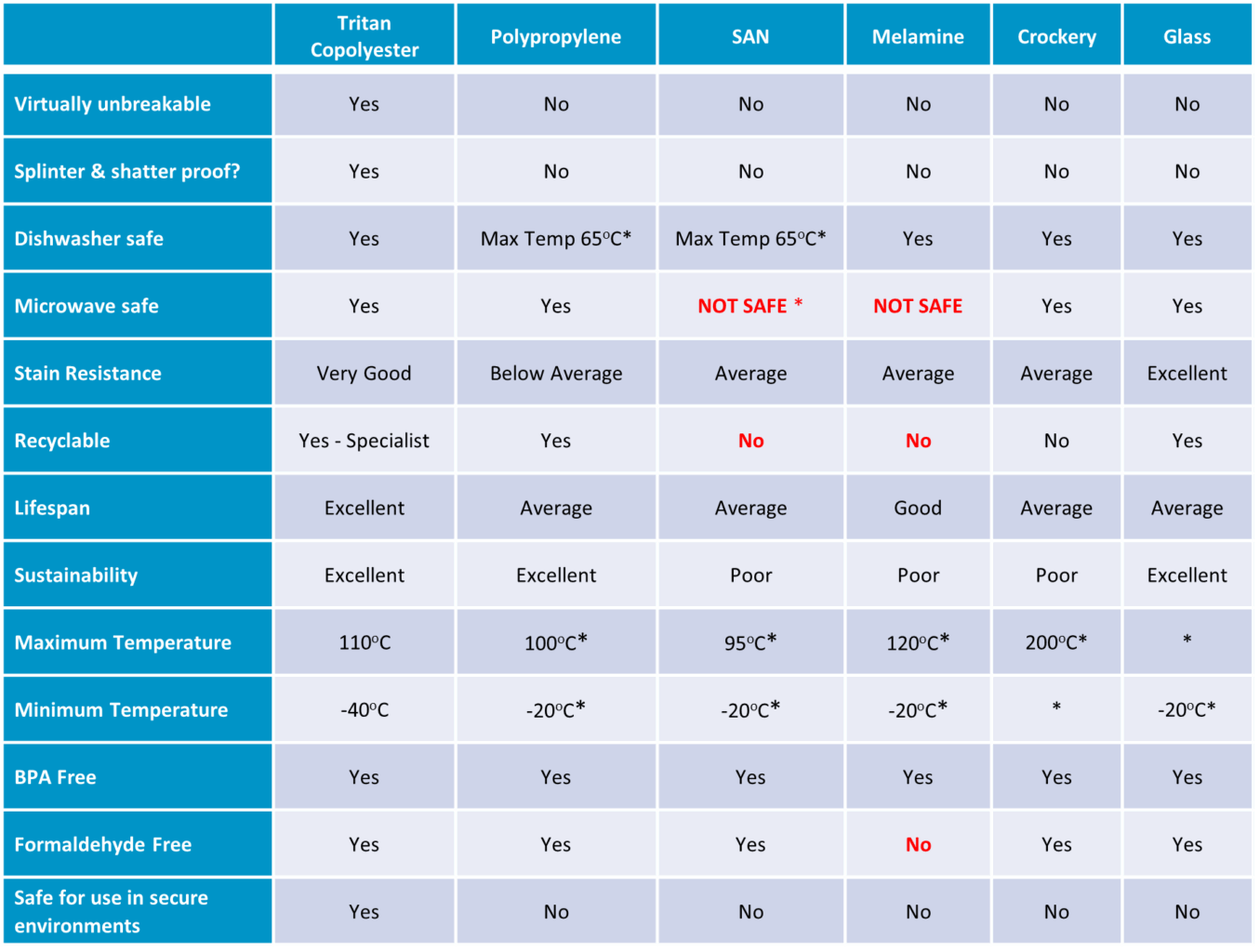
Understanding the differences between tableware materials

Frequently Asked Questions: BPA changes and Harfield tableware